
Ever looked at your bank account and thought, “Wait, where did all my money go?” You’re not alone. While we all budget for the big stuff—rent, groceries, gas- it’s often the sneaky little charges that quietly siphon off your hard-earned dollars. These costs rarely announce themselves with flashing neon signs. Instead, they hide in plain sight, buried in fine print or conveniently added after the fact.
From surprise service charges to misleading subscriptions, hidden fees have a way of piling up like clutter in a junk drawer. And before you know it, you’re shelling out hundreds, sometimes even thousands, a year without realizing it. The worst part? Many of these fees are optional or avoidable if you know where to look and how to push back.
In this deep dive, we’re pulling back the curtain on 14 of the most common hidden fees that drain your wallet. We’ll break down exactly what they are, where they’re hiding, and how to dodge them like a pro. Whether you’re trying to stretch your paycheck, build savings, or regain control of your finances, this guide will help you plug the leaks in your budget.
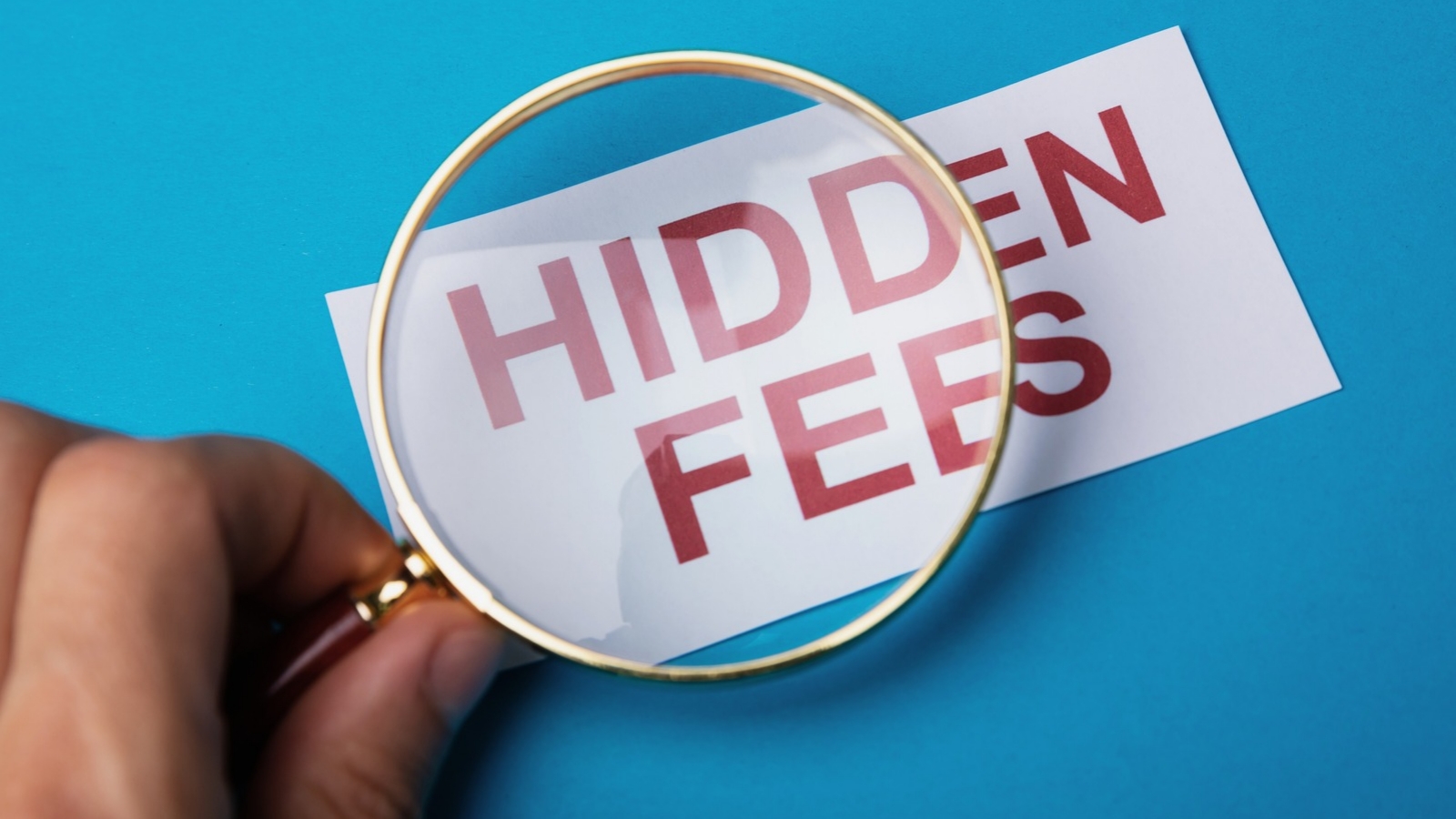
1. Bank Maintenance Fees You Didn’t Sign Up For
You might assume that once you open a checking or savings account, it’s free to use as long as you’re a customer. Wrong. Many banks impose “maintenance” or “monthly service” fees, which can range from $5 to $25 per month. These are fees for the privilege of keeping your money in their institution.
The catch? These charges are often waived if you meet specific criteria, such as maintaining a minimum balance or enrolling in direct deposit. Miss just one month, and boom, you’re hit with a fee. These stipulations are typically buried in your terms and conditions, and you may not notice them.
To avoid them, shop around for truly no-fee accounts, especially those offered by online banks or credit unions. Additionally, contact your bank and request a waiver. You’d be surprised how often they’ll remove fees just because you asked nicely.
2. Resort Fees That Weren’t in Your Booking Price
So, you score a great deal on a hotel for $120 a night. You arrive, enjoy your stay, then check out and see an unexpected $40-per-night “resort fee.”
These resort fees—sometimes labeled as “destination” or “facility” fees cover things like pool towels, Wi-Fi, or access to a gym, whether you use them or not. They’re not always disclosed upfront, especially if you book through a third-party site. This deceptive pricing tactic makes hotels seem more competitive than they are.
To fight back, use booking sites that include all taxes and fees in their total price. You can also filter results to show the real cost. Before booking, call the hotel directly to inquire about any additional charges. Better yet, consider staying at places that openly advertise “no resort fees.”
3. Subscription Services You Forgot About
Ever sign up for a free trial and think, I’ll cancel before it charges me”? Then three months later, you’re shocked to see a $14.99 charge for a service you completely forgot you had?
This is the classic trap. Companies count on your forgetfulness. Subscription creep is real—streaming services, fitness apps, digital magazines, even software you downloaded once and never used again. Over time, these can quietly eat up hundreds of dollars.
The fix? Do a monthly audit of your subscriptions. Use tools like Truebill or Rocket Money, which scan your bank statements and flag recurring charges. Or go old-school and check your credit card statements line by line. You may be paying for a meditation app and five streaming services, yet using only one of them.
4. Sneaky Airline Fees That Add Up Fast
Found a cheap flight? Great—until you add baggage, seat selection, and priority boarding, and suddenly, you’re paying double. Low-cost carriers are notorious for breaking tickets into pieces and charging for everything from overhead bin space to in-flight soda.
It’s not just budget airlines, either. Even major carriers now unbundle standard amenities. Want to pick your seat? That’s $25. Carry-on bag? Another $30. Want to sit with your kid? Pay up.
Before booking, compare total costs, not just ticket prices. Use tools like Google Flights or Hopper, which display fare classes and additional fees. If you fly often, an airline credit card might waive some of these charges.
5. ATM Withdrawal Fees (Especially When You Travel)
Ever had to grab cash in a pinch and got slapped with a $3 ATM fee, and your bank charged you another $3 for using an out-of-network machine? That’s $6 to access your own money.
The worst offenders are standalone ATMs in airports, hotels, or gas stations. They charge premium fees simply because they know you’re desperate.
Avoid this by planning. Withdraw enough from your bank before traveling. Alternatively, consider switching to a bank that reimburses ATM fees—many online banks, such as Charles Schwab or Ally, offer this benefit. Additionally, some banking apps will display nearby fee-free ATM locations.
6. Credit Card Foreign Transaction Fees
Taking your card abroad? Be aware: many credit cards charge a fee of 1% to 3% on every foreign purchase. Buy a $100 meal in Paris? That’s an extra $3 tacked on.
These fees apply not just overseas but even when you shop online at international stores. They sneak up on you, especially if you’re not checking your statement in detail.
The best defense is a credit card with no foreign transaction fees. Cards from Capital One and Chase Sapphire typically waive these. If you’re unsure, call your provider or check your card’s terms before traveling.
7. Car Rental Insurance You Might Not Need
Standing at the rental counter, the agent says, “Do you want insurance coverage?” You panic. What if you crash? What if it’s vandalized? So you say yes at $15 to $30 per day.
What they don’t always tell you is that your auto insurance, or even your credit card, may already provide coverage. That means you could be paying twice for the same protection.
Before renting, check with your auto insurer and credit card company. Many major cards offer rental car insurance as a benefit if you pay with the card. Please ensure that you decline the rental agency’s coverage in writing to activate your card’s policy.
8. Cell Phone Carrier Fees and Surcharges
Look closely at your monthly cell phone bill, and you’ll see a slew of mysterious charges—regulatory fees, recovery fees, “administrative” costs. These often add $10 to $20 monthly, and they’re not part of your plan’s advertised price.
These fees aren’t taxes. They’re just extra charges the carrier decided to pass on to you, often without much explanation. Over a year, they can cost you hundreds of dollars.
Switching to a smaller or prepaid carrier can help. Companies like Mint Mobile or Visible offer more transparent pricing with fewer add-ons. Or call your carrier and negotiate; some fees can be waived if you threaten to leave.
9. Overdraft Fees That Snowball Fast
Overdraft fees are brutal. You swipe your debit card for a $4 coffee, and your account is $2 short. Then, another fee is charged for each subsequent transaction, until you realize what has happened.
Banks made over $8 billion from overdraft fees in 2023 alone. That’s not a typo. And most of the burden falls on people living paycheck to paycheck. Consider opting out of overdraft protection. Yes, your card will be declined, but it’s better than a cascade of $35 charges. Some banks, such as Chime, also offer no-fee overdrafts up to a specified limit.
10. Utility Bill Processing Fees
Paying your electric bill online with a credit card? You might be charged a “processing fee.” It’s usually just a few bucks, but it adds up, especially if you’re paying multiple utilities this way.
Some companies charge extra for the convenience of electronic payments. They’re saving money on paper bills but charging you more. Verify if your utility company accepts ACH transfers (bank-to-bank) without incurring any fees. You can also set up autopay from a checking account to avoid credit card surcharges.
11. Shipping & Handling Fees That Don’t Match Reality
Ever ordered something for $10 and paid $8 for “shipping and handling”? Then the item arrives in a tiny envelope with a 50-cent stamp. This markup is one of the oldest tricks in online retail.
Some companies inflate shipping costs to offset discounts or draw you in with low product prices. “Free” items that require a $12.95 shipping fee? Classic example. Be cautious of unusually high shipping fees and carefully review return policies. Tools like Honey or CamelCamelCamel can help you compare actual costs and spot inflated deals.
12. Early Termination Fees on Contracts
Whether it’s your gym, cable provider, or phone plan, leaving early can result in additional costs. These contracts often come with hefty early termination fees (ETFs)—sometimes as high as $300 —designed to keep you locked in.
And they’re rarely discussed upfront. You only learn about them when you try to cancel.
Always ask about cancellation terms before signing anything. If you’re stuck, consider transferring the contract to someone else; sites like LeaseTrader and CellSwapper exist for this very purpose.
13. Paper Statement Fees
Some banks and service providers now charge you to receive a physical statement in the mail. That’s right—you’re being billed for getting a piece of paper.
This charge usually ranges from $1 to $3 per month. It’s marketed as an eco-friendly move, but make no mistake, it’s also a way to squeeze a few extra bucks from customers.
Switch to paperless billing where possible, and keep digital backups. If you need paper statements, ask if there’s a way to receive them for free.
14. Parking Service Fees

Apps like SpotHero and ParkWhiz promise discounted parking, but they often tack on a “service fee” at checkout. You may save $2 on the space, but pay $3 in fees.
The same goes for stadiums, airports, and even some hospitals. There’s the price you see, and the price you pay.
To sidestep these issues, consider comparing different apps or booking directly through the parking facility. If you’re visiting a hotel or venue, ask if they validate. You may be able to avoid the entire charge altogether.
Final Tips
Hidden fees are like financial termites—gnawing away at your wallet little by little until you suddenly realize there’s a hole in your budget. While none of these charges are outrageous on their own, together they can quietly drain hundreds or even thousands of dollars each year.
The good news? With a bit of awareness, you can spot these fees before they strike. Whether it’s switching to a no-fee bank account, auditing your subscriptions, or refusing that unnecessary rental car insurance, small actions can add up to significant savings.
You work hard for your money. Don’t let fine print and silent charges take it from you. Keep your eyes open, ask questions, and make these hidden fees a thing of the past.